Turkish Pointer (Tarsus Çatalburun Av Kopegi)
The Turkish Pointer is a rare breed with a split or 'double' nose, thought to enhance their scenting ability. Most dogs in this pointing breed use both ground-scenting and air-scenting concurrently when hunting.
Interested in discovering if your dog is a Turkish Pointer (Tarsus Çatalburun Av Kopegi)?
Check out Wisdom Panel's DNA tests.
Turkish Pointer (Tarsus Çatalburun Av Kopegi) Traits
General Appearance
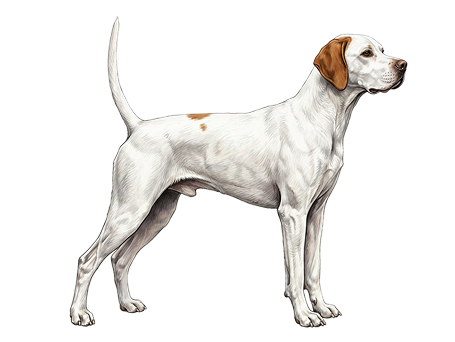
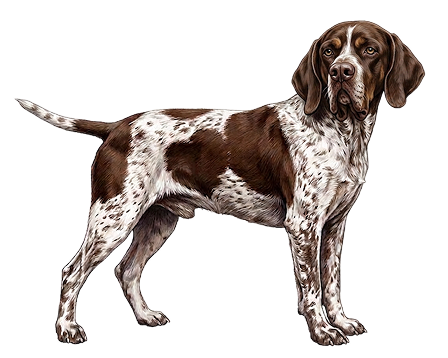
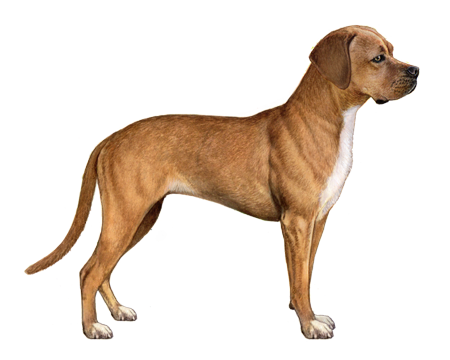
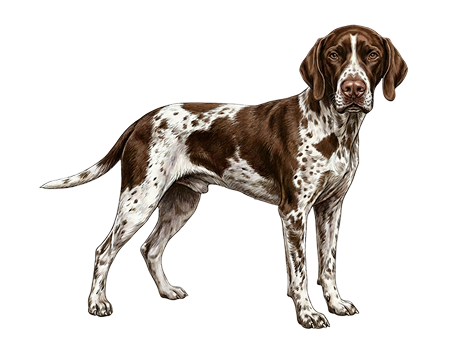
The defining physical trait of the Turkish Pointer is the split (bifid) nose, in which the left and right nostrils are separated by a deep indentation or cleft, which may predispose them to cleft palate defects. They have large, drooping ears that frame the face.
Coat and Coloring
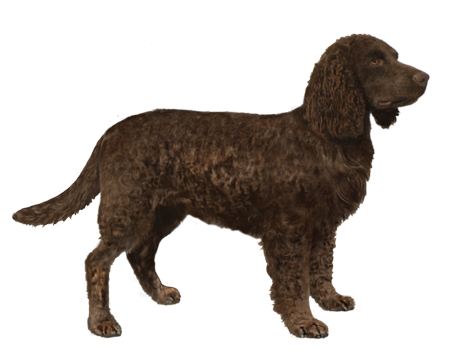
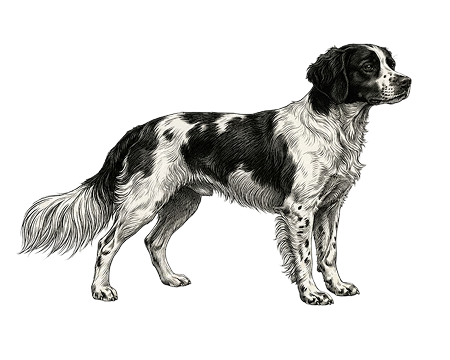
The Tarsus has a short coat. Brown is the most common color found in the breed, followed by brown and white, black and white, and black.
Distinctive Physical Traits
The Tarsus is a medium to large-sized dog with a slightly rectangular build, deep chest, and an athletic build. Their head is broad and domed with wide-set eyes and large drop ears. They have a long, straight tail.
Turkish Pointer (Tarsus Çatalburun Av Kopegi) Temperament
Turkish Pointers are known for their itelligence, quietness even on the hunt, and excellent tracking abilities. As pets, they are said to be calm and good with children.
Turkish Pointer (Tarsus Çatalburun Av Kopegi) History
The Turkish Pointer, or Tarsus Çatalburun Av Kopegi, is a native pointing breed from Turkey. They are associated with the town of Tarsus in Mersin Province on the Mediterranean coast, where clear documentation for their breeding to hunt upland game exists since 1930.
The word çatalburun means "forked nose" in Turkish, referring to the breed's most distinctive feature. Due to the shared split-nose trait, as well as conformation and hunting style, it is theorized that the Tarsus Çatalburun and the Spanish Pachón Navarro share a common origin in the 8th century, when both southern Turkey and Spain were under the rule of the Umayyad and Abbasid Caliphates. There is considerable debate as to whether the Tarsus çatalburun is the ancestor of the Pachón Navarro or vice versa. The breed is very rare with only a few hundred individuals, and it is not recognized by the Turkish Kennel Club KIF or the FCI.
Turkish Pointer (Tarsus Çatalburun Av Kopegi) Care
Nutrition
To meet the Tarsus' nutritional needs, feed them a high-quality food formulated for a medium-to-large, active breed. Obesity can contribute to poor joint health so their weight and body condition should be monitored. To manage their portions, feed them twice daily and measure or weigh meals to avoid over-feeding. As your dog ages, talk with your veterinarian about dietary changes needed for different life stages.
Grooming
The Tarsus' short coat requires minimal grooming; weekly brushing and occasional baths will likely suffice. To round out their grooming routine, check and clean ears regularly, trim nails monthly, and provide regular at-home dental care.
Exercise
As a working pointing breed used for hunting partridge and francolin, the Tarsus çatalburun requires regular vigorous exercise in open terrain.
Training
The Tarsus tracks scents both on the ground and in the air simultaneously. Training activities that tap into these skills will help the breed thrive.
Breed Group
Sporting
The sporting group breeds are incredibly diverse in personality and appearance, but can be characterized as very sturdy. They were developed to work closely with people and in general have a very responsive nature and high intelligence.