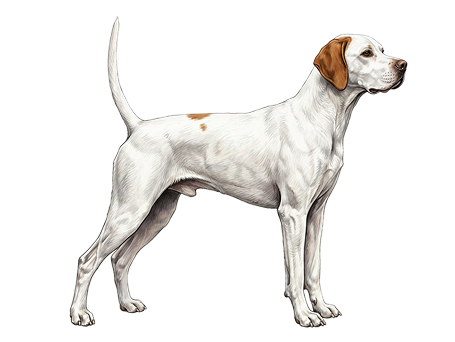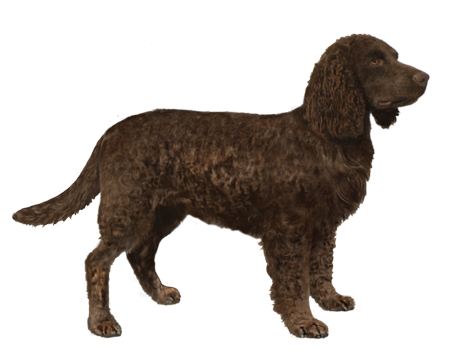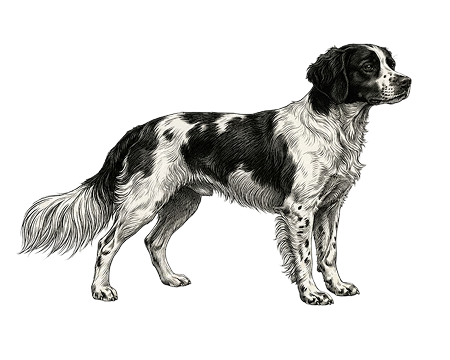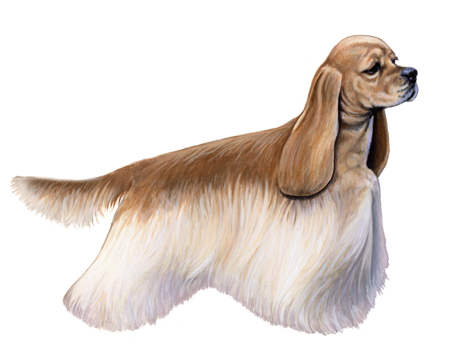
Picardy Spaniel
The Picardy Spaniel is known by breed enthusiasts as the "little clown of the marshes" thanks to their playful, sociable temperament. They are loyal, affectionate dogs that form tight bonds with their families and have a fondness for children.
Interested in discovering if your dog is a Picardy Spaniel?
Check out Wisdom Panel's DNA tests.
Picardy Spaniel Traits
General Appearance
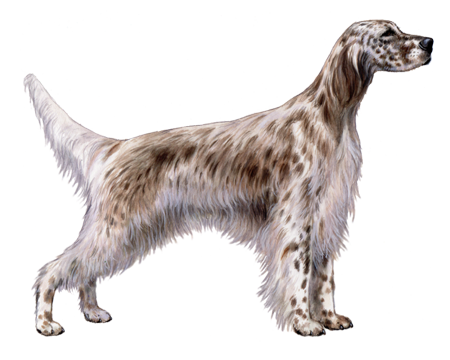
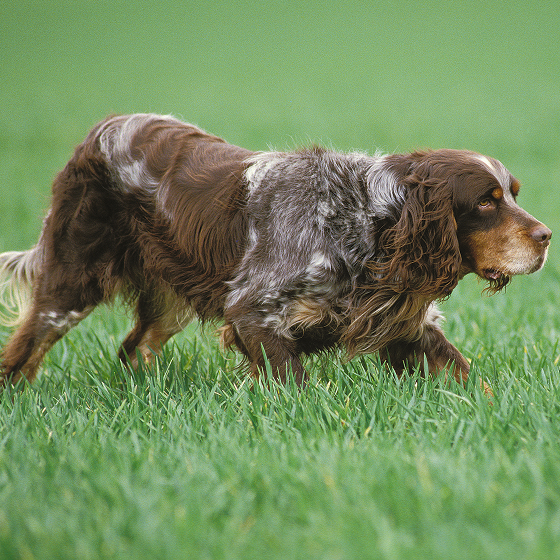
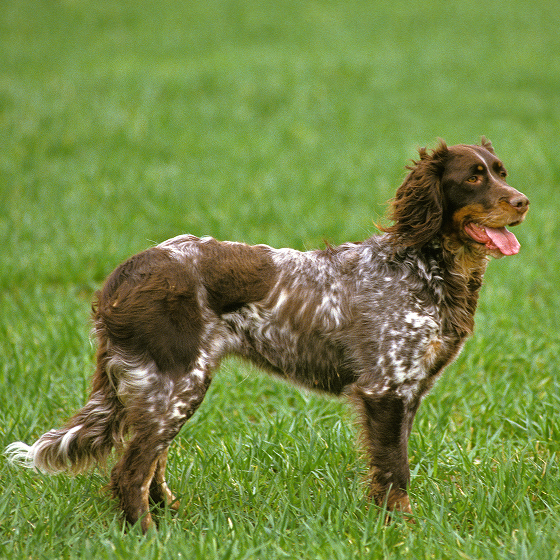
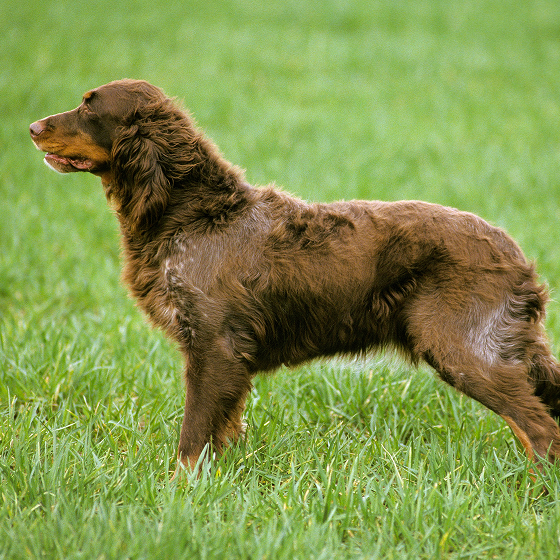
Picardy Spaniels are medium-to-large sized, muscular, and squarely built with an elegant athletic bearing. They are similar in size to an English Setter, though slightly smaller. Their overall appearance balances power with agility.
Coat and Coloring
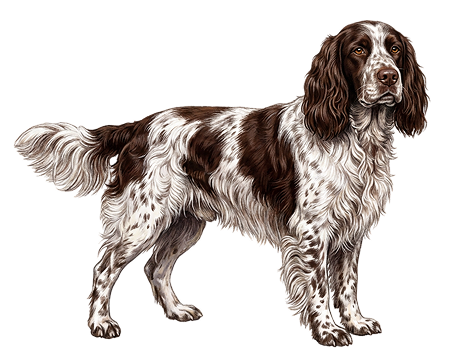
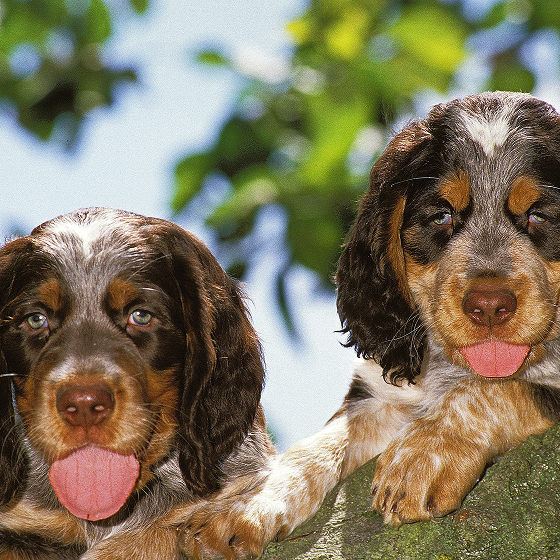
Picardys have a thick, slightly wavy outer coat of moderate length with feathering on the ears, tail, and legs. Their undercoat is softer and insulating. Characteristic colors include mottled/speckled brown with solid chestnut and chocolate patches on a grey-brown base — resembling the plumage of a grey partridge. This coloring provides excellent natural camouflage in hunting environments. Their coat is weather-resistant and ideal for hunting in the wooded and marshy conditions of northwestern France.
Distinctive Physical Traits
Picardy Spaniels have a long, broad muzzle, slightly arched in the middle. Their long, pendulous ears are fairly low-set and have silky feathering. Their expressive eyes come in shades ranging from amber to brown. They have a deep chest reaching to their elbows with a slight tuck-up and a strong, straight back.
Picardy Spaniel Temperament
Picardy Spaniels are docile, gentle, sociable, playful, intelligent, and affectionate. They are very fond of children and bond closely with family. They love spending time with their human companions and are at risk for separation anxiety if left alone for long periods. Picardys are good with other dogs, but their hunting instinct makes them unsuitable for homes with small non-canine pets. They make alert watchdogs and are known to being easy-going pups that keep their pet parents entertained.
Picardy Spaniel History
The Picardy Spaniel is considered one of the two oldest continental spaniel breeds, with origins traceable to the 14th century. Experts believe the breed stems from the Chien d'Oysel described in Gaston Phoebus's 14th-century writings. The French and Picardy Spaniels are speculated to share this common ancestor.
The Picardy Spaniel developed specifically in the Picardy region, particularly near the Bay of Somme in northern France, where the abundant waterfowl shaped it into an exceptional hunting dog for wooded areas, swamps, and marshes. It was favored by the French nobility and remained popular after the French Revolution when hunting was opened to all.
During the early 19th century, British hunters crossing the Channel brought English breeds (including English Setters), causing French hunters to switch preferences and nearly wiped out the Picardy Spaniel. Crosses with English Setters during this period produced a related but distinct breed — the Blue Picardy Spaniel.
The Picardy Spaniel was formally recognized as a separate breed in 1907, and the breed standard was formalized in 1908. A breed club was established in 1921 and merged with the Blue Picardy Spaniel Club in 1937-1938. The breed nearly became extinct after WWII but was revived by dedicated enthusiasts. Picardy Spaniels are recognized by the FCI, UKC, North American Kennel Club, and American Rare Breed Association.
Picardy Spaniel Care
Nutrition
To meet the Picardy Spaniel's nutritional needs, feed a high-quality food formulated for a medium-to-large, active sporting breed. A protein-rich diet will support field work. Carrying extra weight can worsen joint stress, so it's important to monitor their weight to keep them in a healthy range. To manage their portions, measure or weigh meals to avoid over-feeding and keep treats to no more than 10% of their daily calories. As your dog ages, talk with a veterinarian for guidance specific to their life stage.
Grooming
The Picardy's grooming requirements are low-to-moderate. Brush them weekly to remove loose hair and prevent tangles in their feathered areas, and bathe them as needed. Ear infections are common in this breed, so check and clean their ears regularly to prevent issues. To round out their grooming routine, trim their nails monthly and provide regular at-home dental care.
Exercise
The Picardy Spaniel is a high-energy hunting breed that requires a minimum of 60–90 minutes of vigorous daily exercise. They have excellent stamina, so long walks, runs, swimming, and fieldwork are all good ways for them to stay active. This breed is not suited to apartment living without significant daily outdoor time. They can adapt to city living if their exercise needs are met, as the breed will happily rest in small spaces.
Training
Picardys are highly intelligent, eager to please dogs and one of the more naturally biddable sporting breeds. They are sensitive to correction, so positive reinforcement methods work best. Early socialization and obedience training will help them develop into well-mannered, well-adjusted adult dogs. If you want to tie their training to their innate skills, hunting, tracking, obedience, and agility are great choices.
Picardy Spaniel Genetic Health Conditions
-
Neuronal Ceroid Lipofuscinosis 8 (Discovered in the English Setter)
Neuronal Ceroid Lipofuscinosis 8 (NCL8) is a progressive disease causing uncoordinated movements, behavioral changes, vision loss, and epileptic seizures.
Knowing if your Picardy Spaniel is a carrier or at-risk for these conditions can help you and your veterinarian plan for your pup’s lifelong care. With Wisdom Panel™ Premium, you can get results for over 200 genetic health tests.
Breed Group
Sporting
The sporting group breeds are incredibly diverse in personality and appearance, but can be characterized as very sturdy. They were developed to work closely with people and in general have a very responsive nature and high intelligence.