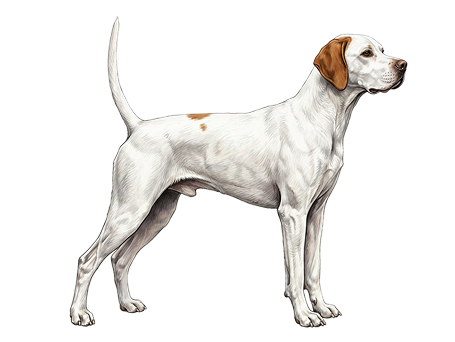
American Field Pointer
The American Pointer is even-tempered, affectionate, alert, and high-energy. This breed has superior hunting instincts and is known for being eager to please.
Interested in discovering if your dog is an American Field Pointer?
Check out Wisdom Panel's DNA tests.
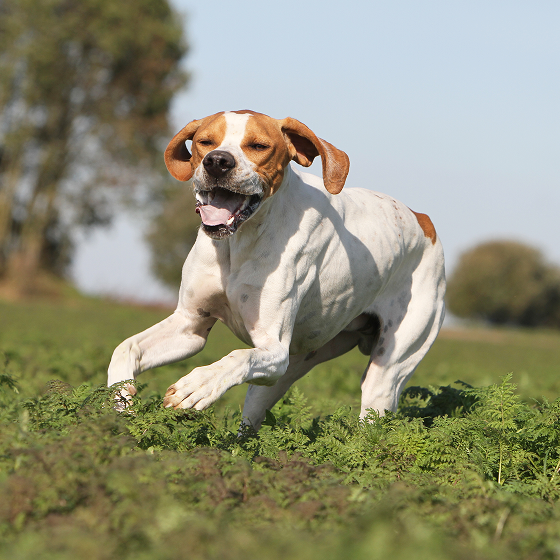
American Field Pointer Traits
General Appearance
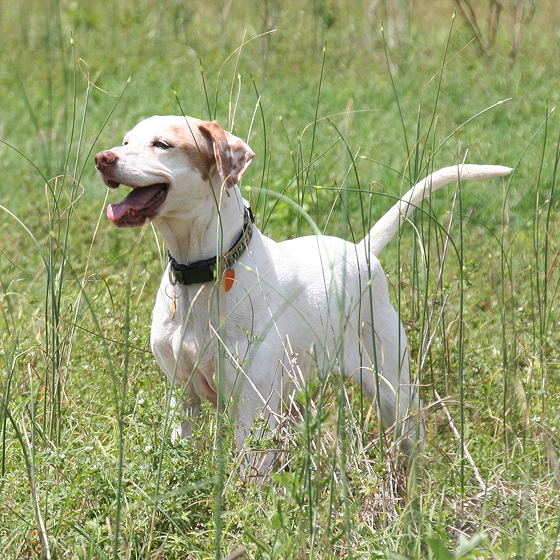
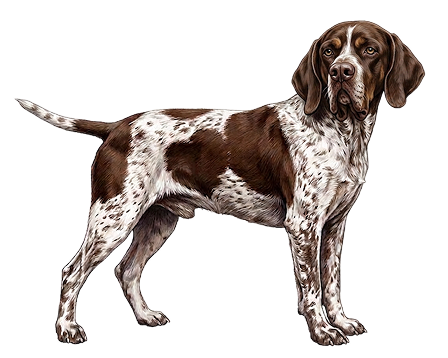
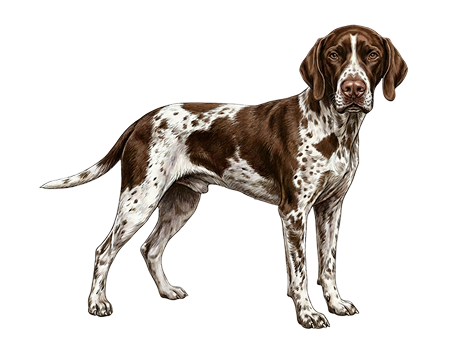
The American Field Pointer is a medium-sized, lean, and elegant dog with a cat-like, powerful build. The breed gives an immediate impression of agile grace.
Coat and Colouring
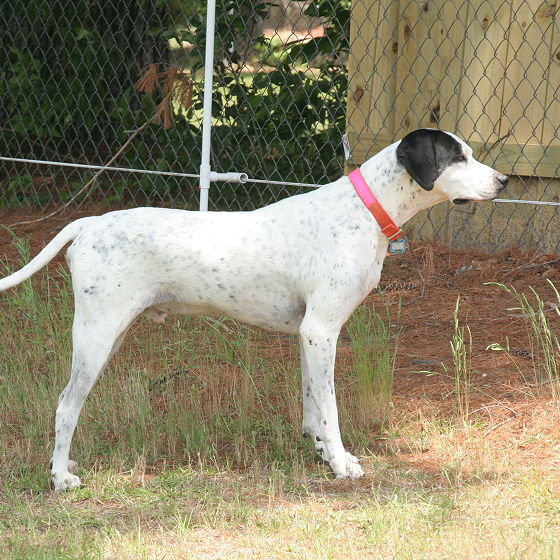
The American Field Pointer has a short, dense, smooth coat that reveals their lean, athletic physique. UKC-recognized colors include liver, lemon, black, and orange with white, but mostly white dogs are favored for higher visibility at a distance. Their coat is easy to maintain and weather-resistant for field work.
Distinctive Physical Traits
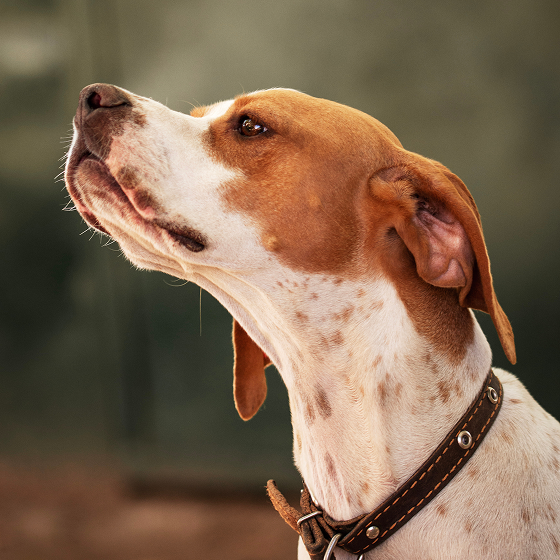
American Field Pointers have extremely clean lines, with much less bone and "dishing" of the face with a smoother stop than their English-bred counterparts. Their short, tapered "bee-sting" tail is often carried straight in line with the spine, but in some lines, nearly upright or "cracked" tail carriage is preferred. Their ears are long and drop-style and their eyes are large, rounded, and dark in color. The American Pointer's body length roughly equals their height at the withers.
American Field Pointer Temperament
The American Field-Bred Pointer is a friendly breed that is good with children when properly socialized. They are deeply loyal to family and are known as one of the most trainable sporting breeds. They can be somewhat aloof with strangers but are not timid. Pointers do have a very high prey drive and energy level when in the field, but are calmer and affectionate at home as long as they get adequate exercise. Some dogs may be sensitive or fearful if they are handled harshly.
American Field Pointer History
The American Field Pointer, although still registered as English Pointers with working dog studbooks in the US, is physically and genetically distinct, with a much lighter build and capability of greater speed and endurance. Until the turn of the 20th century, American field-trial hunters strongly preferred English Setters to English-imported pointers, believing them to be inferior retrievers and unable to handle rough American field conditions. However, in 1909 a Pointer won the National Championship, signaling a shift toward faster, longer-range versatile hunting dogs. American Field Pointers have dominated field trials ever since, with other Pointers and the English Setter relegated to occasional wins.
The Pointer was among the initial eight breeds officially registered when dog shows and registries began in the United States, and the AKC recognized it in the Sporting group. Over the last 100 years, lines of American Pointers, including the famous Miller and Elhew lines have been refined, but continue to be registered as English Pointers. These dogs were selectively bred for a more biddable temperament, lighter bone, endurance and athleticism for superior field trial performance.
American Field Pointer Care
Nutrition
To meet the Pointer's nutritional needs, feed a high-quality dog food appropriate for a large, active sporting breed. A protein-rich diet will support muscle mass and hunting endurance. It's important to keep this breed at a healthy weight, as obesity can worsen joint health and reduce field performance. To manage their food portions, feed them twice daily and measure or weigh meals to avoid over-feeding. This breed is also at greater risk of bloat due to their deep chest. For this reason, avoid vigorous exercise immediately before or after meals. As your dog ages, talk with a veterinarian for guidance specific to their life stage.
Grooming
The Pointer's short coat is very low maintenance. Typically all they require is weekly brushing with a soft brush or grooming glove to remove loose hair and debris, and baths only as needed. Check and clean their long floppy ears regularly to help prevent infection. After field work in wetlands, check for paw infections (pododermatitis) and dry their feet thoroughly. To round out their grooming routine, trim their nails monthly and provide regular at-home dental care.
Exercise
Pointers need at least 60–90 minutes of vigorous daily exercise—without this, they will become restless and may develop destructive behaviors. This is an athletic breed that is not well-suited to apartment living. They thrive when doing activities that tap into their natural skills, like hunting, field trials, tracking, agility, and outdoor adventures.
Training
Pointers are highly intelligent, eager to please, and biddable. For these reasons, they are one of the most trainable sporting dogs. They respond very well to consistent positive reinforcement training. By contrast, they are sensitive to harsh correction. Early obedience training and socialization are recommended to help them develop into confident, well-mannered dogs.
American Field Pointer Genetic Health Conditions
-
Acral Mutilation Syndrome
Acral Mutilation Syndrome (AMS) causes insensitivity to pain, leading to a tendency to lick or bite paws excessively. This often results in loss of toenails, fractures, and toe amputation.
Knowing if your American Field Pointer is a carrier or at-risk for these conditions can help you and your veterinarian plan for your pup's lifelong care. With Wisdom Panel™ Premium, you can get results for over 200 genetic health tests.
Breed Group
Sporting
The sporting group breeds are incredibly diverse in personality and appearance, but can be characterized as very sturdy. They were developed to work closely with people and in general have a very responsive nature and high intelligence.



















Resources
Reviewed by Casey Knox, DVM