French Spaniel
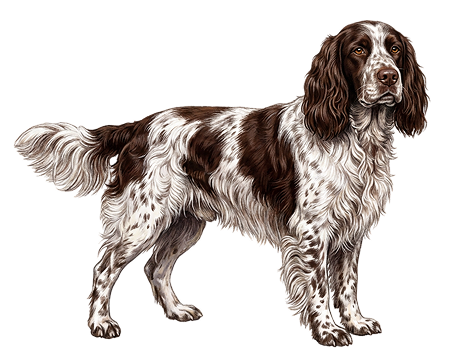
The French Spaniel is an intelligent, affectionate, and gentle breed. The diverse varieties of hunting spaniels we have today are largely descended from the ancestors of this breed.
Interested in discovering if your dog is a French Spaniel?
Check out Wisdom Panel's DNA tests.
French Spaniel Traits
General Appearance
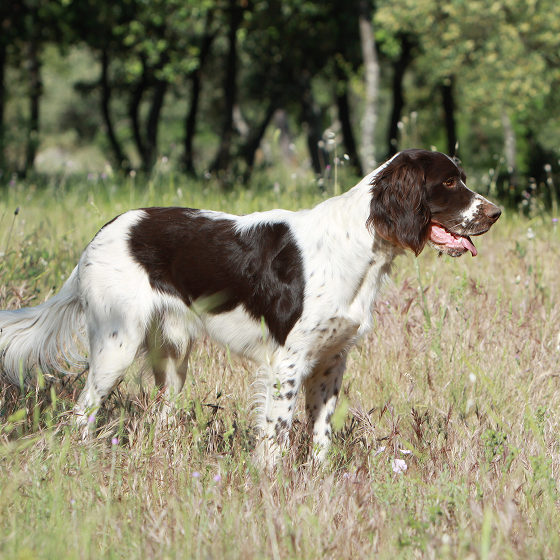
French Spaniels are medium-to-large sized. They are well-balanced, elegant, and well-muscled, with strong but not coarse bone.
Coat and Colouring
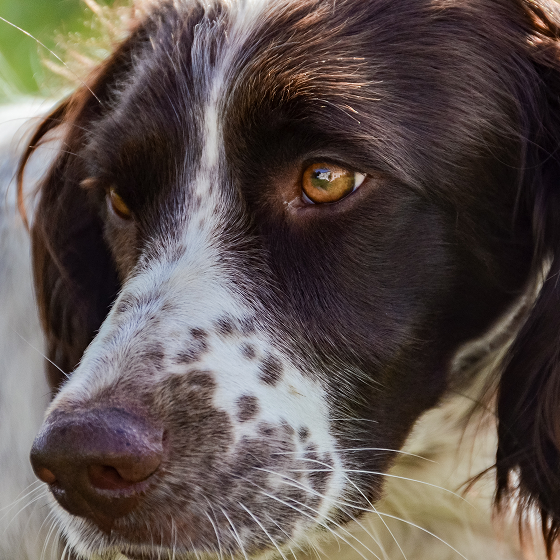
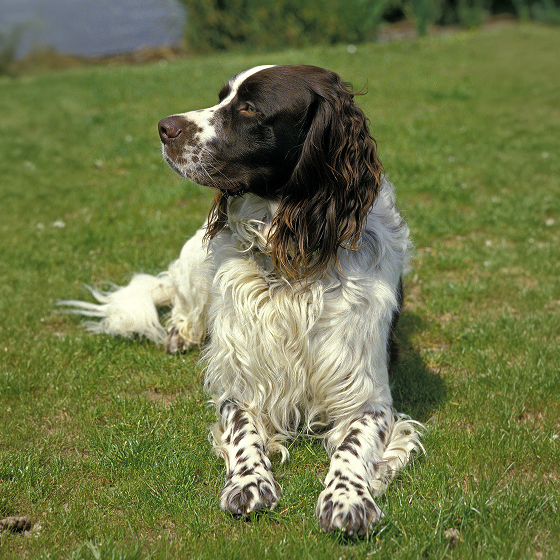
The French Spaniel's coat is moderately long and wavy on the ears and tail, while smooth, dense, and silky on the rest of the body. Their standard color is white with brown markings, with the brown ranging from cinnamon to dark liver. Some dogs have roan or spotted patterns.
Distinctive Physical Traits
The French Spaniel's body is slightly longer than tall. Their head is medium length and width, and carried proudly, while the skull and muzzle are of equal length. They have large, expressive dark amber eyes. Their drooping ears are set at eye level and covered with long, wavy hair. Their tail is sword-like and tapers slightly.
French Spaniel Temperament
French Spaniels have a soft, calm, gentle, docile, and enthusiastic temperament. They are deeply affectionate and form strong bonds with their people. In fact, they are well-suited to family life, including children of all ages. They are typically sociable with other dogs but may be reserved (but not aggressive) with unfamiliar people. French Spaniels don't like to be left alone for long periods, so plan on including them in activities or arranging schedules so they get plenty of time with people. These pups are not well-suited to apartment life.
French Spaniel History
The French Spaniel or Épagneul Français is one of the oldest pointing dog breeds in existence. Its ancestry is traceable to bird-hunting dogs first mentioned in Gaston III of Foix-Béarn's 14th-century work "Livre de chasse." The breed was popular with French royalty during the Middle Ages, favored at the courts of Louis XII and Versailles, and owned by Catherine I of Russia.
By the early 20th century, competition from foreign sporting breeds nearly drove the French Spaniel to extinction. Luckily, French priest Father (Abbé) Fournier preserved the breed at his Saint Hilaire kennel. The French Spaniel Club was first recognized by the Société Centrale Canine in 1921.
The breed was introduced to Quebec, Canada in the 1970s and recognized by the Canadian Kennel Club in 1985. The UKC recognized the breed in 1996, while the AKC has included it in its Foundation Stock Service.
French Spaniel Care
Nutrition
To meet the French Spaniel's nutritional needs, feed a high-quality diet appropriate for a medium-to-large active sporting breed. Choosing a protein-rich diet will support field work and muscle maintenance. To manage their intake and prevent over-feeding, feed them twice day and measure or weigh meals—and keep treats to 10% or less of their total daily calories. As your dog ages, talk with your veterinarian for life-stage appropriate feeding guidance.
Grooming
To help keep your French Spaniel looking and feeling their best, brush them 2–3 times per week to prevent tangles in their feathered areas—or more often during periods of seasonal shedding—and bathe them every 6-8 weeks or as needed. Ear infections are common in this breed, so check and clean their ears regularly to prevent issues. To round out their grooming, trim their nails monthly and develop a regular at-home dental care routine.
Exercise
French Spaniels require a minimum of 60 minutes of vigorous daily exercise. Activities such as field work, tracking, retrieving, agility, and off-leash running will burn energy while tapping into their natural tendencies. Mental stimulation through scent work and retrieving games is as important as physical exercise.
Training
These eager-to-please, intelligent dogs are highly trainable. They respond exceptionally well to positive reinforcement. By contrast, they are sensitive to tone, so harsh training methods are counterproductive. If you want to tie their training to their innate skills, consider hunting work, agility, obedience trials, and search and rescue. To help your dog develop confidence and manners, begin obedience training and socialization early.
French Spaniel Genetic Health Conditions
-
Acral Mutilation Syndrome
Acral Mutilation Syndrome (AMS) causes insensitivity to pain, leading to a tendency to lick or bite paws excessively. This often results in loss of toenails, fractures, and toe amputation.
Knowing if your French Spaniel is a carrier or at-risk for these conditions can help you and your veterinarian plan for your pup's lifelong care. With Wisdom Panel™ Premium, you can get results for over 200 genetic health tests.
Breed Group
Sporting
The sporting group breeds are incredibly diverse in personality and appearance, but can be characterized as very sturdy. They were developed to work closely with people and in general have a very responsive nature and high intelligence.