Dogs hold a special distinction in the animal kingdom: they were the first domesticated animals, forming a partnership with humans long before we began farming, herding livestock, or building cities. But exactly how far back that relationship goes has long been a subject of scientific debate.
The timeline of the human-dog relationship
Two landmark studies recently published in the journal Nature are helping to answer that question. Researchers analyzed ancient canine DNA from sites across Europe and found genetic evidence that dogs were already distinct from wolves—and living closely alongside humans—more than 14,000 years ago. The oldest confirmed dog sample in one study came from a site in Switzerland and was approximately 14,200 years old. Another study identified a consistent dog population across Europe that existed at least 14,300 years ago.
These findings extend a timeline that was already impressively long. Previous genetic work had placed the oldest definitively identified dogs at around 10,900 years old. The new studies demonstrate that dogs had been around long enough to develop that level of divergence from wolves thousands of years prior. These findings place the beginnings of domestication in the Upper Paleolithic period, a timeline spanning 12,000 to 50,000 BP, with artificial selection by humans dating back 14,000 years.
Additional evidence from researchers at Clemson university shows that dogs were present in human communities at least 12,000 years ago. These findings support an early relationship with dogs as well. For example, Anatolian hunter-gatherers buried their dogs alongside their human dead, suggesting these animals held a special place in the community’s eyes. Other ancient cultures appear to have included dogs in ritual practices. Across wildly different societies, separated by geography and time, the evidence points in the same direction—dogs weren’t just useful, they were true companions.
From wolves to dogs: the path to domestication
The path from wolf to dog was not a sudden event. Domestication is a long process that spans thousands of years. Scientists believe the earliest stages involved wolves that were naturally less fearful or aggressive around human settlements. Over time, those wolves may have benefited from associating with humans—scavenging food scraps, for instance—while humans in turn gained early warning systems and hunting assistance. Over time, that partnership between dogs and people deepened, with dogs performing, and eventually being selectively bred for, jobs like herding, hunting, and guarding.
Dogs and wolves still share approximately 99.9% of their DNA, a reminder of just how recent this evolutionary split is in biological terms. Yet the behavioral and social differences are significant. Dogs have developed an extraordinary ability to understand and respond to human cues in ways that wolves simply do not. Over time, they even developed muscles around their eyes that allow them to give “puppy dog eyes”—an expression that enhances their ability to communicate with people.
Research suggests earliest dogs didn’t resemble the range of breeds we know today. They were likely smaller, wolf-like animals whose genetic lineages have nonetheless persisted into many of the breeds we know today.
The human-dog bond in modern life
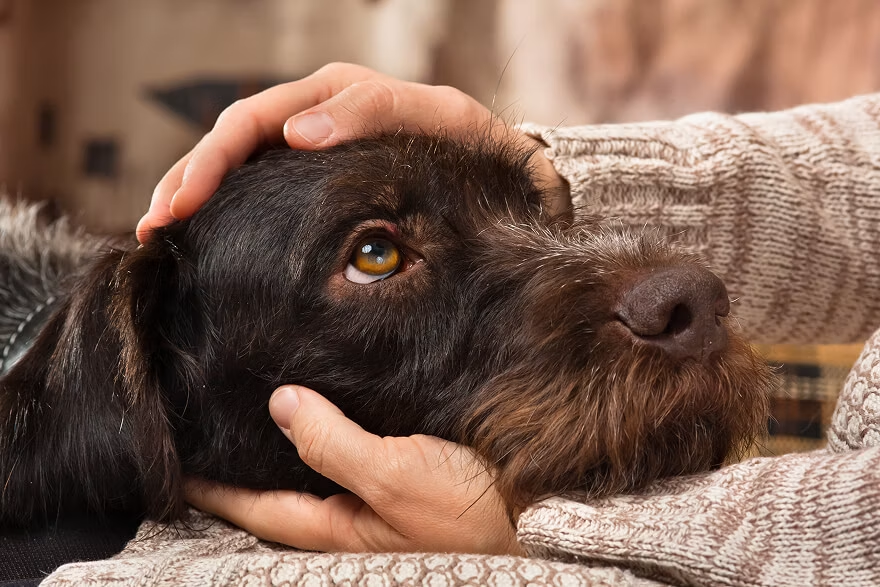
As anyone with a pup in their home knows, dogs occupy a central role in family life. In fact, researchers have discovered a range of measurable health effects from that relationship.
Studies have found that interacting with dogs can:
- Promote the release of hormones like oxytocin (AKA the "love hormone")
- Reduce stress indicators such as cortisol levels and heart rate
- Improve overall mood and emotional well-being.
These effects have been documented across diverse populations, from college students managing anxiety to elderly individuals battling social isolation. Today, the impact of dogs is so profound that therapy dog programs now operate in hospitals, aged care facilities, and mental health services—and the evidence base supporting their use continues to grow.
The future of a very old friendship
The story of dogs and humans isn’t just ancient history—it continues to evolve and reflect a changing society.
Trends in breeding and genetics
Modern dog populations reflect both ancient ancestry and recent breeding practices. While purebred dogs represent more recent, structured selection, the majority of dogs found worldwide can more accurately be described as mixed-breeds, landraces, street or village dogs, or some other place on the dog population spectrum.
Genetic testing can help tell your dog’s whole story by identifying ancestry, traits, and potential health risks. These insights, combined with a close partnership with a veterinary care team, can guide your pup’s care throughout their life.
Potential challenges in maintaining the human-dog bond
While the bond between dogs and humans is as strong as ever, it faces some modern-day pressures. The cost of caring for a dog has risen sharply in recent years. Veterinary care in particular has become a significant financial burden for many households. This creates difficult situations for pet parents who are deeply bonded with their pets but struggle to access or afford care.
Housing is another friction point. Rental restrictions on dogs—particularly larger breeds—can force painful choices for renters. And as work-from-home arrangements that boomed during the pandemic have shifted back toward office environments in many industries, separation anxiety in dogs has emerged as a growing behavioral concern.
The good news? The human-dog relationship has survived 14,000-plus years of change. Navigating ongoing challenges will require commitment and intention, but humans have never been more committed to understanding their pups and giving them the life they truly deserve.