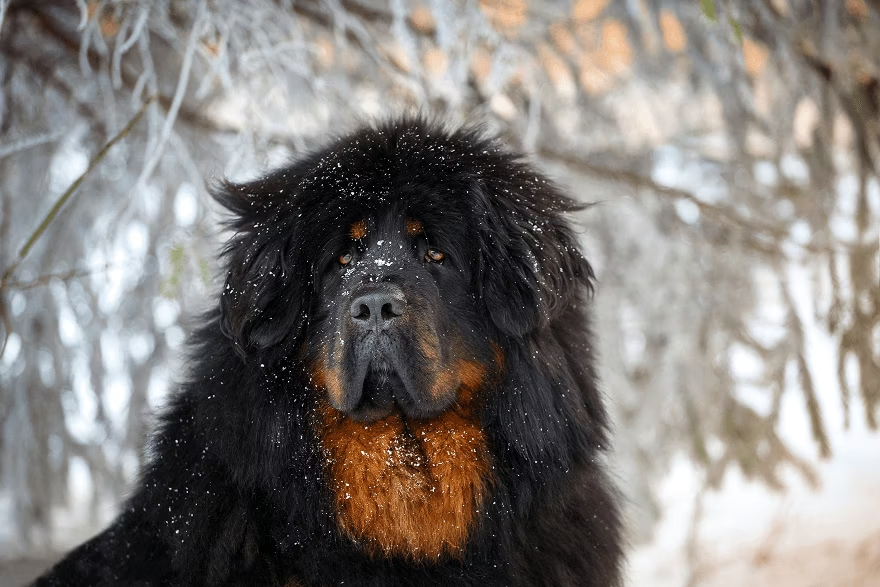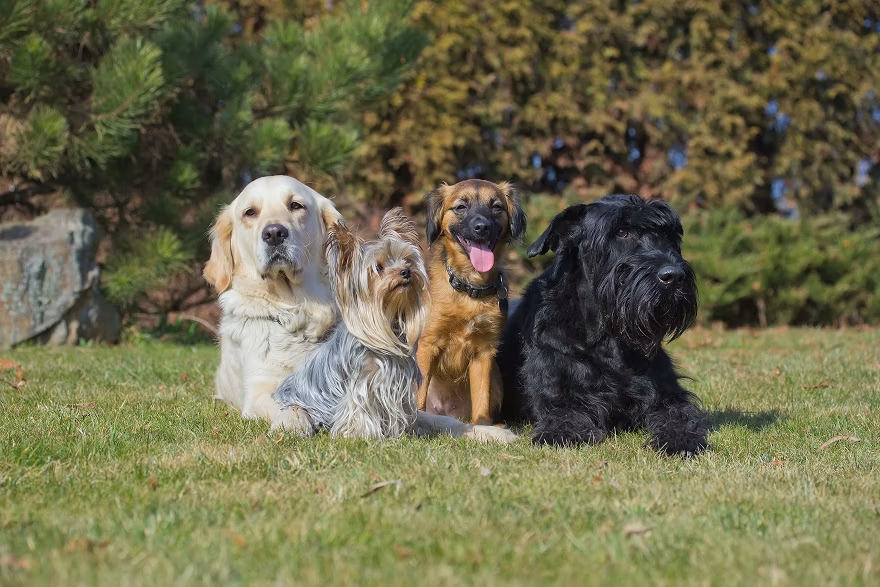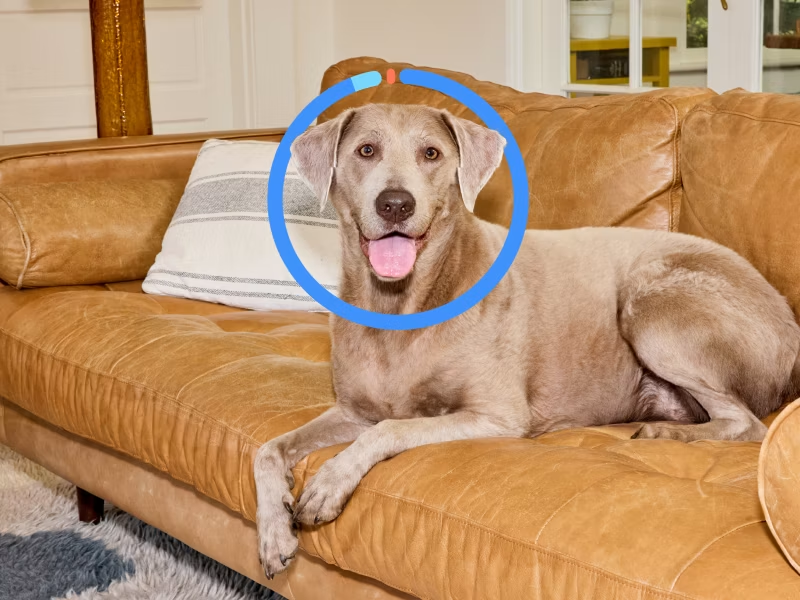
Were you caught off guard by your dog’s DNA results? Maybe you were expecting a Labrador mix, but the results say American Pit Bull Terrier, Poodle, and Australian Cattle Dog. If your pup looks a lot like a Lab and nothing like the breeds found in their ancestry, your first thought may be, the DNA results are wrong. While that’s an understandable reaction, the truth is traits are less specific than ancestry and can be misleading.
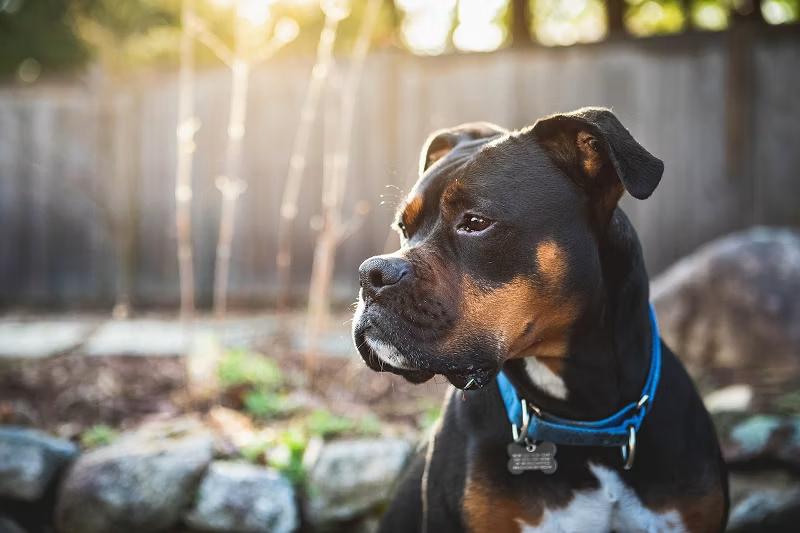
A dog’s appearance is a surprisingly poor predictor of their ancestry. In fact, a study found that people who worked in dog-related professions correctly identified a dog’s predominant breed only about one third of the time when relying on appearance alone. That’s because the interactions between breed ancestry and traits are complex.
Your pup is one of a kind because their physical traits reflect only a fraction of the DNA they inherited. Understanding a few basic genetic concepts can help explain why your dog’s DNA results may look surprising at first—but actually make perfect sense.
Genotype vs phenotype
Every dog’s DNA contains thousands of genes that influence everything from coat color and ear shape to body size, behavior, and disease risk.
Your dog’s genotype is the complete set of genetic information they inherited from their ancestors. Their phenotype is the collection of observable traits produced by that DNA. This includes visible characteristics like coat type, ear shape, and body size, as well as many biological traits that aren’t obvious just by looking at them.
Think of it this way:
- Genotype = the complete genetic blueprint
- Phenotype = the expressed traits that you can see with your own eyes
It’s natural to focus on standout features—like curly fur, short legs, or a spotted coat pattern—and associate them with specific breeds that we then assume will be in the DNA of a dog that displays those traits. In reality, a handful of eye-catching traits can often lead to breed misidentification.
How traits are inherited and expressed
Dogs inherit half of their DNA from their mom and half from their dad, but the genetic segments in that DNA are determined at random. That’s one reason puppies in the same litter can look quite different from one another, even though they share the same parents. Because each puppy inherits a different combination of DNA, they may end up with different breed percentages and different combinations of physical traits.
Dominant vs recessive traits
Another reason dogs don’t always resemble every breed in their ancestry is because some traits are dominant and some are recessive. Dominant traits need only one copy of the gene for a trait to be expressed. Recessive traits require two copies—one from each parent—for that trait to be expressed. Here’s a basic example:
Imagine a recessive gene for a particular eye color. If a dog inherits one copy of that gene from their dad along with a dominant gene from their mom, they won’t have that eye color themselves. However, they still carry the recessive version of the gene and can pass it on to future generations.
In reality, this example is an oversimplification. Many traits result from a combination of genes that interact differently with one another. But it demonstrates how your dog may carry genetic information from a breed without ever displaying the physical traits you typically associate with that breed.
Very few traits are specific to a single breed
It’s easy to imagine that dogs inherit a “Labrador gene” for friendliness. But that’s not how genetics works. Let’s take a closer look.
Simple Traits
The majority of the visually-dominant traits that owners notice are actually caused by single variants, such as coat length, furnishings, curly coat, or tan points. Most people associate a given trait with only one or two breeds, when in fact it is shared across dozens or hundreds or breeds. For example, most owners when asked to name a black and white breed, say Border Collie, but never American Pit Bull Terrier, which is an extremely common breed in mixes. Or if asked for a breed with short legs, Dachshund is a common answer, but never Shih Tzu or Chihuahua, which also often carry the trait.
To compound matters, many breeds can carry a range of traits that the public are not aware of, and some colors and patterns are never seen unless the breed is crossed with a different breed. For example, Golden Retrievers almost always carry the gene for tan pointing, but other genes prevent expression until combined in a mixed-breed dog. Poodles have furnishings, but this isn’t obvious until combined in other breeds. When this combo occurs in small-breed dogs, it can give the appearance of terrier ancestry when there is none.
As it turns out, what resembles a Labrador Retriever to most is a short-coated black dog with floppy ears. All three of those traits are dominant, and will hide a variety of other recessive traits that might give clues to the dog’s deeper ancestry.
Complex Traits
In contrast, some traits that are easily overlooked are polygenic, or complex in nature. A dog inherits 39 pairs of chromosomes from their parents, and those chromosomes contain thousands of genes. Characteristics such as body size, ear shape, muzzle length, and coat texture are influenced by multiple genes rather than a single gene. The particular combination your dog inherited determines how those traits are expressed. For example, when a Pug is bred to a Dachshund, the resulting offspring typically have a more average muzzle length more akin to that of a Russell Terrier, not the shortened muzzle of the Pug or the elongated muzzle of the Dachshund.
If your dog received results from a Wisdom Panel Premium test, the Chromosome Browser lets you explore this idea even further by seeing which sections of your dog’s chromosomes came from different breeds. Rather than inheriting one breed at a time, your dog’s ancestry is woven throughout their genome, creating the unique combination of traits that makes them who they are.
Breed percentages don’t predict appearance
It’s natural to assume that the breed contributing the largest percentage of DNA should determine how a dog looks. In reality, that’s not always the case.
Imagine a dog whose ancestry is:
- 40% Labrador Retriever
- 25% Australian Cattle Dog
- 20% Boxer
- 15% Poodle
Based on these results, you might expect them to look mostly like a Labrador because it’s the largest percentage. But remember, a dog’s physical appearance depends on which genes were inherited—not just how much DNA came from each breed.
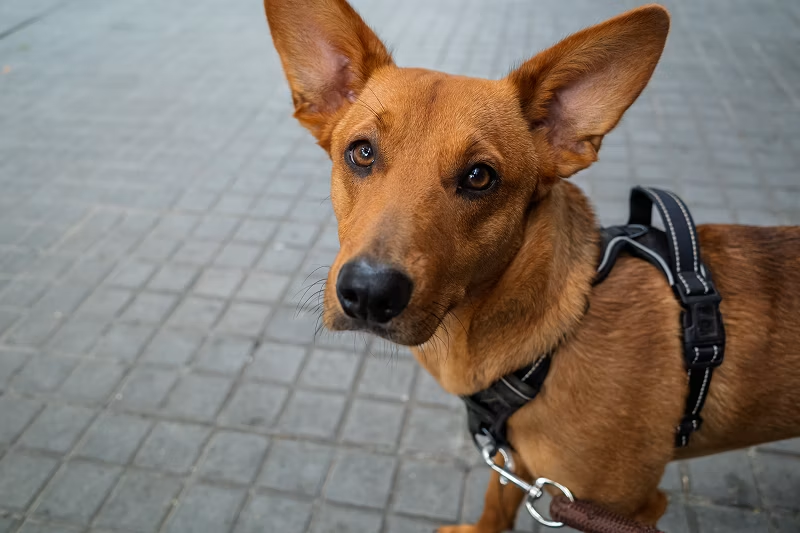
If the dog in this example inherited the Australian Cattle Dog’s upright ears and speckled coloring, and the Poodle’s beard, those features might be the first things people notice. Meanwhile, some of the traits caused by the many genes of their ancestral breeds averaging together, such as body proportions, head shape, temperament, or eating habits, aren’t immediately obvious.
As a result, someone meeting this dog might think they look more like a Poodle mix or an Australian Cattle Dog mix—even though Labrador Retriever is their largest breed by ancestry. In other words, breed percentages describe ancestry, not appearance.
The bottom line
DNA testing reveals your dog’s whole genetic story—but their breed ancestry is only one chapter. To fully comprehend how genetics influence how your dog looks, their behavior, their health, and other factors requires digging into the full details of their DNA results. As is the case with many things in life, looks can be deceiving and understanding the full picture requires looking beyond the surface.